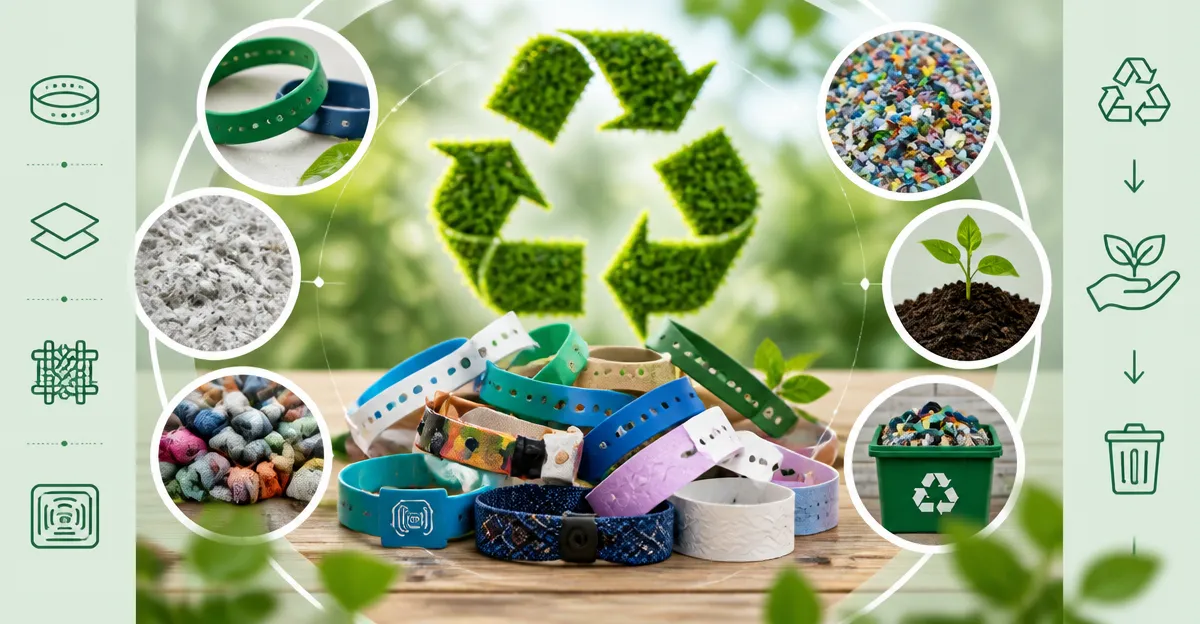
Complete Guide to Wristband Recycling Programs and End‑of‑Life Options: How to Recycle, Repurpose, and Safely Dispose Silicone, Tyvek, Fabric & RFID Bands
Introduction
This guide explains the full lifecycle of disposable and reusable wristbands used at events, gyms, schools, and workplaces. Readers will learn how to identify recycling streams, repurpose surplus bands, and dispose of items that cannot be recycled safely. The article also recommends specific products that simplify collection, sorting, and reuse, ensuring compliance with environmental standards.
By the end of the guide, one will understand the material differences between Tyvek, silicone, cotton‑blend fabrics, and RFID‑enabled bands, and will have a clear action plan for each category.
Background and Context
Wristbands are manufactured from a limited set of materials: high‑density Tyvek (a synthetic polymer), silicone rubber, blended cotton fabrics, and occasionally embedded RFID chips. Each material follows a distinct recycling pathway. Tyvek, for example, can be recycled with paper streams in many municipalities, while silicone often requires specialized rubber recycling facilities. Fabric bands, especially those containing cotton, may be composted or donated if still usable.
Regulations vary by region, but most waste‑management programs encourage source separation, clear labeling, and the removal of adhesives before recycling. Understanding these nuances prevents contamination, which can render an entire batch unrecyclable.
Key Concepts and Strategies
1. Material Identification
- Tyvek Wristbands: Lightweight, water‑resistant, and tear‑proof. Often used for security because they are tamper‑evident.
- Silicone Bracelets: Flexible, waterproof, and durable. Common for promotional or fitness use.
- Fabric Sweatbands: Typically cotton‑blend, designed to absorb moisture.
- RFID‑Enabled Bands: Combine a polymer base with electronic components; require electronic waste handling.
2. Collection and Sorting
Effective recycling begins with a simple collection system. Use color‑coded bins: blue for Tyvek, green for silicone, and yellow for fabric. Label each bin with an icon and a brief description to guide staff and volunteers.
For large events, consider a dedicated WristCo Tyvek Wristbands collection pouch. The pouch’s perforated sheets make it easy to separate individual bands for counting and later distribution.
3. Cleaning Before Recycling
All reusable bands should be cleaned to remove sweat, adhesives, or ink. Silicone can be washed with mild soap and warm water; Tyvek tolerates a gentle wipe with a damp cloth. Fabric bands are machine‑washable, as noted for the BEACE Athletic Sweatband, which is both hand‑ and machine‑washable.
4. Repurposing Ideas
When bands remain in good condition, repurposing extends their life:
- Use Tyvek bands as color‑coded identifiers for inventory or equipment.
- Transform silicone bracelets into keychains or bag tags by adding a small metal loop.
- Fabric sweatbands can serve as small cleaning cloths for glasses or keyboards.
- RFID bands can be donated to schools for library checkout systems.
Product Recommendations Integrated with Recycling Practices
Tyvek Wristbands
The WristCo Tyvek Wristbands come in a 600‑piece, six‑color variety pack priced at $9.38. Their premium‑grade DuPont Tyvek is tear‑proof and features tamper‑evident adhesive closures, making them ideal for secure event admission. The sequential numbering assists in crowd monitoring and simplifies post‑event inventory tracking.
Positive customer sentiment highlights the bright neon orange band’s visibility and the smooth cloth‑like edge that prevents paper cuts. With a 4.8‑star rating from 2,136 reviews, these bands provide excellent value for schools, fundraisers, and festivals.
High‑Volume Tyvek Option
The WristCo 5‑Color Tyvek Wristbands supply 1,000 bands for $13.88, offering a larger inventory for multi‑day conferences. Users appreciate the bright neon colors for quick identification and the durability that prevents loss.
Both Tyvek products are compatible with standard recycling programs that accept polymer‑based paper alternatives.
Silicone Bracelets
The BRANDWINLITE Red Silicone Bracelets are sold in packs of 12 for $5.99. Made from latex‑free, eco‑friendly silicone, they are waterproof and suitable for all‑day wear. Their 8‑inch length fits most teens and adults, and the material can be recycled at rubber recovery facilities.
Customers praise the comfortable stretch and the versatility for sports, charity events, and classroom activities. The 4.6‑star rating from 2,650 reviews confirms consistent quality.
For a neutral‑color alternative, the Jovitec Black Silicone Bracelets provide 12 pieces at $4.99. Each band measures 2.56 inches in diameter and can be stretched to fit most wrists. Their blank surface encourages DIY personalization, which can be useful for labeling recycled batches.
Fabric Sweatbands
The BEACE Athletic Sweatband is a cotton‑blend (85% cotton, 10% spandex, 5% nylon) set of six bands priced at $6.99. The terry‑cloth material wicks moisture away, reducing sweat‑related wear on equipment. Because the fabric is washable, it can be reused many times before disposal, decreasing overall waste.
Reviewers note the band’s thickness and reliable sweat absorption, making it a practical choice for gyms, construction sites, and outdoor activities.
Comparison and Selection Guide
| Feature | WristCo Tyvek (600) | WristCo Tyvek (1,000) | BRANDWINLITE Silicone | Jovitec Silicone | BEACE Sweatband |
|---|---|---|---|---|---|
| Material | DuPont Tyvek | DuPont Tyvek | Latex‑free silicone | Silicone rubber | Cotton‑spandex blend |
| Quantity | 600 pcs | 1,000 pcs | 12 pcs | 12 pcs | 6 pcs |
| Price (USD) | 9.38 | 13.88 | 5.99 | 4.99 | 6.99 |
| Rating | 4.8/5 (2,136 reviews) | 4.7/5 (3,698 reviews) | 4.6/5 (2,650 reviews) | 4.6/5 (1,874 reviews) | 4.5/5 (3,850 reviews) |
| Recyclability | Paper‑stream (Tyvek) | Paper‑stream (Tyvek) | Rubber recycling | Rubber recycling | Textile donation/compost |
| Best Use Cases | Small events, schools | Large conferences, festivals | Fitness promos, charity runs | DIY branding, bulk giveaways | Sports, construction, outdoor work |
When choosing a product, consider event size, budget, and the intended end‑of‑life pathway. For high‑visibility security, Tyvek is unmatched. For reusable promotional items, silicone offers durability and a low‑impact recycling route.
Best Practices & Tips for Sustainable Wristband Management
- Plan Ahead: Estimate the total number of bands needed and order a slightly higher quantity to avoid last‑minute purchases that generate excess waste.
- Label Bins Clearly: Use color‑coded signage that matches the band colors to reduce sorting errors.
- Remove Adhesives: For Tyvek bands with tamper‑evident adhesive, peel off the adhesive before recycling to prevent contamination of paper streams.
- Partner with Local Recyclers: Identify a facility that accepts silicone or Tyvek; many municipal centers now list rubber recycling options.
- Donate Usable Bands: Schools, community centers, and sports clubs often accept gently used fabric or silicone bands for free distribution.
- Document the Process: Keep a log of quantities collected, cleaned, and recycled. This data supports sustainability reporting and can improve future event planning.
Frequently Asked Questions
- Can Tyvek wristbands be composted? Tyvek is a synthetic polymer and does not biodegrade in a home compost; however, it can be recycled with paper streams in many municipalities.
- Is silicone recyclable in regular curbside programs? Most curbside programs do not accept silicone. Look for specialized rubber recycling facilities or manufacturer take‑back programs.
- How should I clean fabric sweatbands before donation? Machine wash on a gentle cycle with cold water, then air‑dry. Avoid bleach to preserve color integrity.
- What happens to RFID chips embedded in wristbands? RFID components are classified as electronic waste. Separate them from the polymer carrier and deliver to an e‑waste recycler.
- Can I reuse Tyvek bands for a different event? Yes, provided the adhesive has not been damaged. The bands are designed to be torn off only by destroying the material, so they remain intact for multiple uses if stored properly.
- Are there tax incentives for donating unused wristbands? In many jurisdictions, donations to qualified non‑profits are tax‑deductible. Consult a tax professional for specifics.
- Which product offers the best value for large festivals? The WristCo 5‑Color Tyvek Wristbands provide the lowest cost per unit ($0.0139 each) and include multiple bright colors for easy crowd segmentation.
Conclusion
Effective wristband recycling requires understanding material composition, establishing clear collection systems, and selecting products that align with sustainability goals. By integrating the recommended Tyvek, silicone, and fabric options, event organizers can reduce waste, improve safety, and demonstrate environmental responsibility.
Implementing the best‑practice tips—such as pre‑event planning, proper labeling, and partnership with local recyclers—ensures that each wristband reaches its optimal end‑of‑life destination, whether that is recycling, repurposing, or charitable donation.
Products Featured in This Guide
WristCo Tyvek Wristbands
Price: $9.38 | Rating: 4.8/5 (2,136 reviews)
Featured for its tamper‑evident adhesive, bright color options, and suitability for paper‑stream recycling.
WristCo 5‑Color Tyvek Wristbands
Price: $13.88 | Rating: 4.7/5 (3,698 reviews)
Featured for bulk quantity, vibrant colors for crowd segmentation, and strong market reputation.
BRANDWINLITE Red Silicone Bracelets
Price: $5.99 | Rating: 4.6/5 (2,650 reviews)
Featured for eco‑friendly silicone composition, waterproof durability, and versatile repurposing potential.
Jovitec Black Silicone Bracelets
Price: $4.99 | Rating: 4.6/5 (1,874 reviews)
Featured for affordable bulk supply, blank surface for DIY labeling, and compatibility with rubber recycling streams.
BEACE Athletic Sweatband
Price: $6.99 | Rating: 4.5/5 (3,850 reviews)
Featured for high moisture‑wicking fabric, machine‑washability, and suitability for reuse in sports and construction settings.